What asphalt milling is
Milling uses a machine with a rotating drum full of carbide-tipped teeth to grind off the top layer of asphalt to a set depth. The ground material, called millings or recycled asphalt pavement, is carried up a conveyor into a dump truck. What is left is a clean, textured surface at a controlled height, ready for new asphalt.
For us, milling is never a separate business. It is a tool we use on asphalt driveway paving and parking lot paving jobs, because it makes the finished pavement better and saves material. If you have been searching for asphalt milling in NJ for your own driveway or lot, that is exactly how we provide it: milling plus repaving, priced as one job.
Why milling matters on a driveway
Driveways are surrounded by fixed heights: the garage floor, the front walk, the street, the curb and sometimes a neighbor’s driveway. Every time someone paves a new layer on top of the old one, the driveway gets higher. After a couple of layers stacked on top of each other, water starts running toward the garage, the edge at the street becomes a lip, and the door threshold is buried.
Milling solves that. By grinding off the worn top before paving, or milling a deeper band at the garage and street, we can put down a fresh surface without raising the driveway. That keeps drainage pointed the right way and transitions smooth. It is a standard part of a good driveway repaving job.
On a full replacement, milling can also be the fastest and cleanest way to remove the old driveway, leaving millings that can be reused as base.
Why milling matters on a parking lot
On a parking lot, milling keeps the finished surface level with curbs, sidewalks, building entrances and drain inlets. Without it, a new layer of asphalt would shrink the curb reveal, change how water reaches the drains, and create bumps at every doorway.
Milling also removes oxidized, brittle asphalt and surface cracking, so the new surface course is not sitting on top of the old problems. Where the base has failed, we go deeper: the area is milled or excavated, the base is rebuilt and compacted, and the area is paved before the final surface course.
Recycling: millings as base
Old asphalt does not have to go to waste. Clean millings still contain aggregate and asphalt binder, and when they are spread, graded and compacted they lock together into a firm, well-draining base. We recycle the asphalt we mill, and where it suits the job, we use millings as base material under new asphalt.
Recycling also keeps the job simpler for you. The same trucks that carry millings away from a tear-out can bring material back for the base, and there is less waste to deal with at the end of the day. That has real benefits:
- Less material hauled to a landfill.
- Less new aggregate trucked in.
- A base that compacts well and resists washing out.
We do not mix contaminated material, such as soil-heavy or debris-filled millings, into a base. Clean, properly compacted millings are what make this work.
Our milling and paving sequence
- Assess. At the estimate we decide where milling is needed, how deep, and whether any areas need full-depth repair instead.
- Protect and set depths. We identify the heights to match at garages, doors, curbs, inlets and the street.
- Mill. The milling machine removes the surface to the planned depth, loading millings straight into trucks.
- Repair. Soft or failed spots revealed by milling are excavated and rebuilt with compacted base.
- Clean and tack. The milled surface is swept clean and a tack coat is applied so the new asphalt bonds to the old.
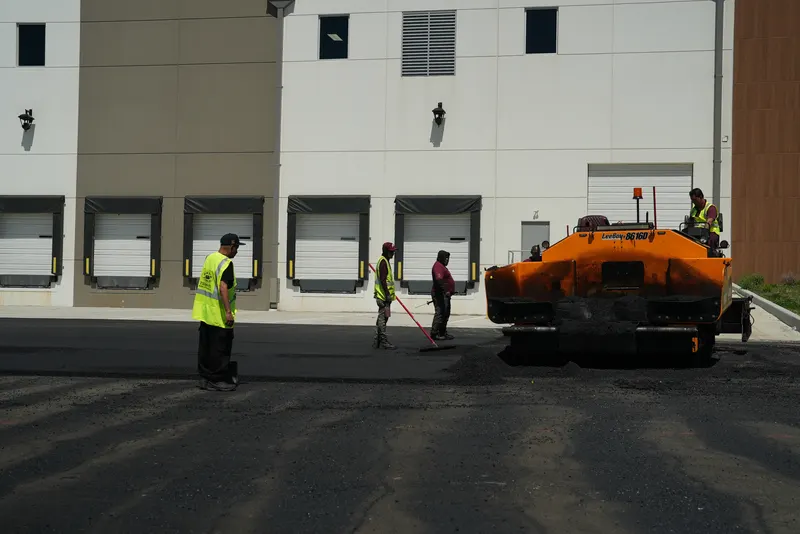
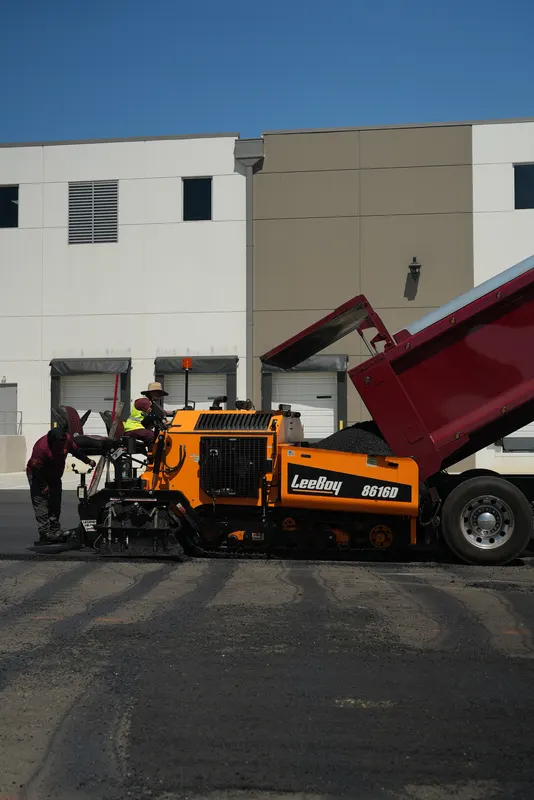
- Pave and roll. New hot mix asphalt is placed with a paving machine and compacted with rollers, meeting every edge flush.
- Walkthrough. We check transitions and drainage with you before we leave.
When milling is not the answer
If the base under the asphalt has failed across most of the area, milling the top and repaving will only hide the problem for a while. In those cases the right answer is full removal and a rebuilt base, which our driveway paving and parking lot paving pages explain. We will tell you which approach your pavement needs. For commercial lots, our guide to milling vs. full-depth replacement goes into the decision in more detail.
What affects the cost of milling and paving
- Area to be milled and the milling depth.
- How many edges, doors and curbs need deeper cuts.
- Base repairs uncovered once the top layer is off.
- Asphalt thickness of the new surface.
- Trucking, access and job size (a milling machine takes time to bring in and set up, so very small areas are less efficient to mill).
Our what shapes the price of a job explains how asphalt jobs are priced. For background on when pavement is due for this kind of work, read signs your pavement needs an upgrade and the advantages of replacing your driveway’s asphalt.
Where we mill and pave
Milling is part of our driveway and lot work across Monmouth County, Ocean County from Toms River north and southern Middlesex County, from Red Bank and Holmdel to Point Pleasant, Brick, Sayreville and East Brunswick.
Questions about asphalt milling & recycling
Do you offer milling as a stand-alone service?
Milling is something we do as part of our own driveway and parking lot paving jobs. It is the first step that makes the new surface work: it removes worn asphalt, sets the right depth at garages, doorways and curbs, and creates a clean surface for the new asphalt to bond to. We quote it together with the paving.
What happens to the asphalt you mill up?
Clean millings are recycled. Asphalt is one of the most recycled materials in construction, and ground-up millings compact into a firm base when placed and rolled correctly. Where it fits the job, we use millings as base material under new asphalt; the rest goes back into the recycling stream rather than to a landfill.
How deep do you mill?
It depends on the goal. On many repaving jobs we mill an inch or two, enough to remove the worn top and leave room for the new surface course. At garage entries, doorways, curbs and the street we often cut deeper at the edge so the new asphalt meets them flush. Failed areas are excavated deeper and the base is rebuilt.
Is milling noisy or messy?
A milling machine is loud while it runs, but milling itself usually goes quickly on a driveway or lot. The machine loads the millings straight into a truck, and we sweep the surface before paving. Expect some dust and noise for a short period, then a clean surface ready for asphalt.