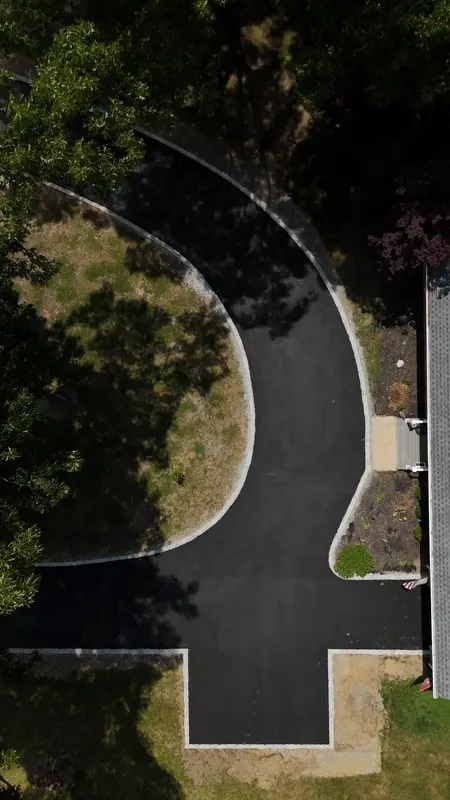
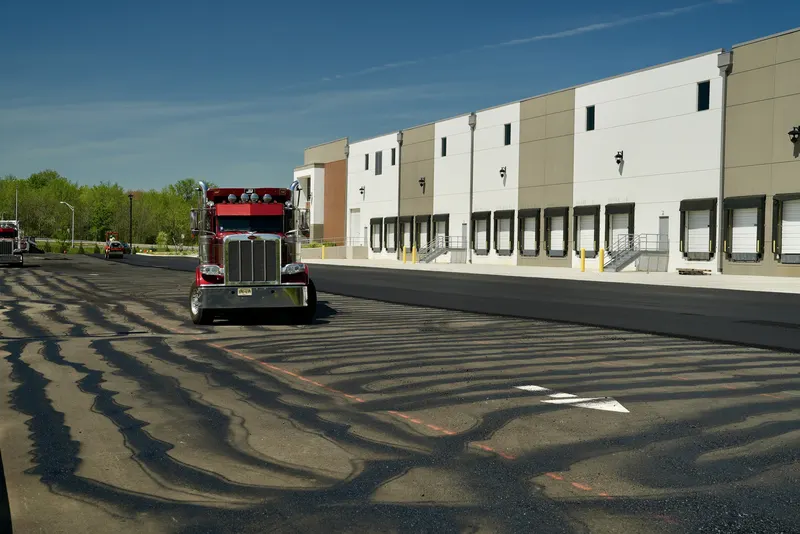
Brick Township stretches from the farms-turned-subdivisions near the Garden State Parkway all the way to the bay and a slice of the barrier island, so no two driveways here are quite the same. Dan The Paver builds asphalt driveways for Brick homeowners and asphalt parking lots for the businesses, associations and property managers who keep this busy Ocean County town running.
Where Brick driveways live
Brick is really several places in one. West of the Parkway, neighborhoods around Herbertsville and the roads feeding Route 88 have larger lots with wider, sometimes two-car-plus driveways and room to park a trailer. Closer to the center of town, the blocks off Brick Boulevard and Route 70 are filled with ranches, Cape Cods and split-levels on modest lots, where the driveway is usually a single straight run from the garage to the curb.
Then there is the water. Neighborhoods along the Metedeconk River and the bay inlets, including the lagoon communities off the bay, have narrow lots, short drives and homes raised after Hurricane Sandy. A raised house changes the driveway too: the grade from the garage or parking pad to the street is often steeper than it used to be, and that slope needs careful shaping so water does not race toward the foundation.
East of the bay, Brick’s barrier island section has a beach-town feel with compact lots and tight clearances, much like neighboring Mantoloking.
Sand, salt and a high water table
Most of Brick sits on loose, sandy coastal plain soil. Sand drains quickly, which is good, but it shifts when it is not confined and compacted. On the drier lots inland we focus on removing old asphalt and topsoil, then compacting a solid layer of dense-graded aggregate so the new surface has something firm to sit on.
Near the river and the bay, the problem flips. The water table can be close to the surface, and old fill under some lagoon lots contains organic material that rots and settles. On those properties we dig deeper, replace soft spots, and build up more base before any asphalt is placed. Grading matters as much as thickness: every Brick driveway we pave is pitched so rain and storm surge drain away, not into a garage.
For a typical residential drive we roll a compacted base and then a finished asphalt layer sized for cars and the occasional delivery truck. If you park a boat or a camper, tell us at the estimate so we can plan the base for that extra weight.
Parking lots on Brick’s busy corridors
Route 70, Route 88, Brick Boulevard and Chambers Bridge Road are lined with shopping centers, restaurants, medical offices, churches and garden-apartment complexes. Those lots see constant turning, braking and delivery traffic, plus salt in winter. We mill worn surfaces, rebuild failed base areas and repave so drainage flows to existing inlets. Property managers and HOA boards can learn more about our approach on the commercial paving page.
Permits and next steps
Driveway aprons, new curb cuts and changes to impervious coverage may need township approval in Brick. Check with the Brick Township construction or zoning office before you widen or relocate a drive.
We also work just north in Point Pleasant and west in Lakewood, and you can see every town we cover on our Ocean County paving page.
Brick paving questions
My Brick house backs onto a lagoon off the Metedeconk. Can a new driveway hold up that close to the water?
Yes, as long as the base is built for wet ground. Lagoon lots near the Metedeconk and Barnegat Bay often sit only a few feet above the water table, so we dig out soft, organic fill, lay down a thicker layer of compacted aggregate, and shape the surface so runoff heads to the street or a lawn edge instead of pooling against your bulkhead side of the property.
Do you pave driveways on the barrier island part of Brick, east of the bay?
We do. The Brick section of the barrier island, along Route 35 just south of Mantoloking, has sandy lots, tight side setbacks and salt air. We plan staging carefully there because streets are narrow and summer traffic is heavy, and we usually schedule those jobs outside the peak beach weeks when possible.
Our strip center on Route 70 has holes and broken areas near the entrance. Do we need to repave the whole lot?
Not always. Entrances along Route 70 and Brick Boulevard take the most turning traffic, so they fail first. We look at whether the damage is limited to the surface or goes into the base. Sometimes milling and repaving the worn lanes is enough; other times the base under the entrance needs to be rebuilt before new asphalt goes down.
Does Brick have rules about how wide my driveway can be?
Brick, like most townships, has zoning standards that can cover driveway width, apron design and how much of a lot can be covered by hard surfaces. Before widening a drive, call the Brick Township construction or zoning office. We are happy to build to whatever layout the township approves.