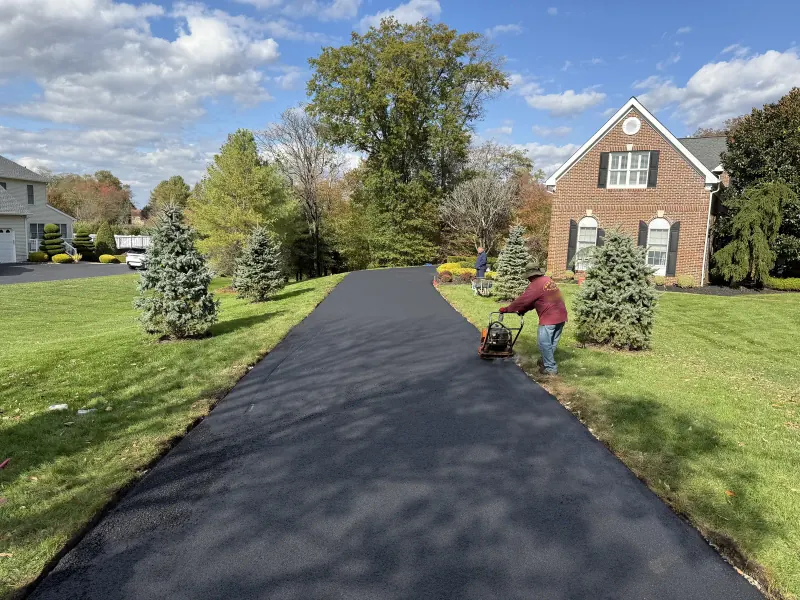
Colts Neck is horse country in the middle of Monmouth County, a township of farms, orchards and large wooded home sites strung along Route 34 and Route 537. Driveways here are often long, curving and built to handle more than a family car. Dan The Paver installs, replaces and extends asphalt driveways across Colts Neck and paves asphalt parking lots for the farm markets, offices, churches and small commercial properties in town.
Estates, farms and long approaches
Very few Colts Neck homes sit close to the road. Many are set well back on wooded or open lots, reached by a drive that runs past pasture fence, through tree cover or along a gentle rise to a circle or motor court in front of the house. Horse farms and equestrian properties add barn lanes and parking for trailers. Newer subdivisions off the main roads have large colonials on acre-plus lots with wide, sweeping drives and side-load garages.
All of that adds up to a lot of asphalt per house. The drive is the first thing guests see and it carries everything from cars to delivery trucks. Our asphalt driveway paving service is suited to that scale, including new construction, full replacement of tired surfaces and widening or extensions for parking courts and turnarounds.
What we watch for on Colts Neck ground
The soils here are mostly sandy loams typical of central Monmouth’s farmland, with clay layers in places and wet ground along the brooks that feed the Swimming River Reservoir. Long drives cross several of those conditions on a single property. One stretch might drain perfectly while a low spot near a stream crossing stays wet into spring.
We treat each stretch on its own merits. Where the subgrade is firm, we compact it and build a uniform aggregate base. Where it is soft, we dig out and replace the weak material. Long drives also need water managed along their length, so we shape a crown or cross-slope and direct runoff into grass shoulders or swales rather than letting it travel down the center of the pavement. Asphalt thickness is set by what the drive will carry, with heavier sections where trucks and trailers turn.
Edges matter too. A long drive with crumbling sides looks worn even if the middle is fine. We compact the shoulders and finish the edges so they stay supported.
The commercial side of a rural township
Colts Neck does not have big malls, but it has businesses that depend on good parking. Farm markets and stands along Route 34, wineries, professional and medical offices, churches, and small retail clusters near the main crossroads all have lots that see busy weekends and seasonal rushes. Naval Weapons Station Earle also occupies a large part of the township, which adds traffic on the main roads.
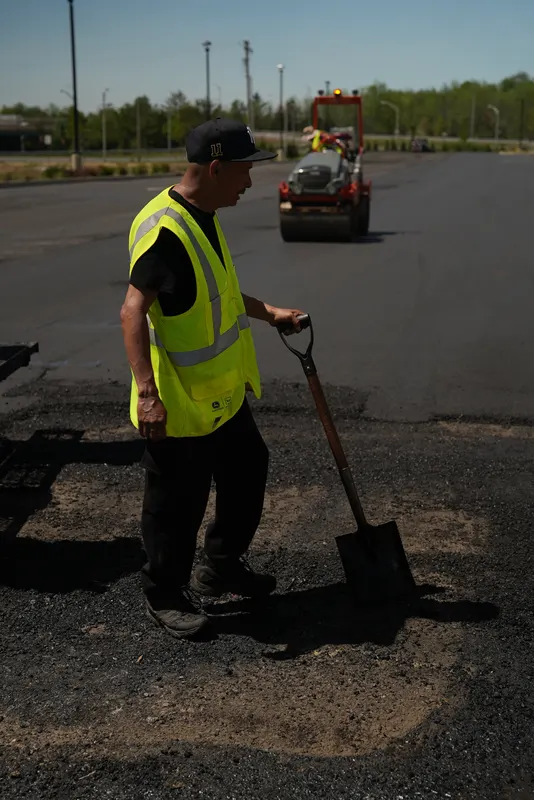
For commercial and institutional owners, our parking lot paving work covers milling, base repair and repaving, with phasing that keeps the business open. On gravel overflow areas that have become a muddy mess, we can discuss converting them to asphalt with a proper base.
A word on permits
Large lots in Colts Neck can still be subject to rules about impervious coverage, driveway openings onto county roads and work near wetlands or streams. Before you widen, extend or add a new curb cut, check with the Colts Neck construction and zoning offices.
Colts Neck is part of our Monmouth County service area. We also pave in neighboring Holmdel and Marlboro, so crews are often nearby.
Colts Neck paving questions
Our Colts Neck driveway is several hundred feet long. Do we have to repave the whole thing at once?
Not always. On long estate and farm drives in Colts Neck, damage is often concentrated in a few places: the apron at the road, a low section that holds water, or a turnaround where trucks pivot. We can rebuild those areas first and mill and repave the rest if its base is still solid, or phase a full replacement. We walk the entire length with you and explain the options.
Can a new drive handle horse trailers and farm equipment?
Yes, if it is designed for them. Plenty of Colts Neck properties see trailers, hay deliveries and tractors. For those, we dig deeper, install a thicker compacted aggregate base and place more asphalt than a typical car-only drive would need. Wider turns and a firm turnaround help heavy rigs avoid running onto soft shoulders and breaking the edges.
Most homes here have wells and septic systems. Does that affect paving?
It can. Before we excavate, we want to know where your septic tank, field and any well lines run so heavy equipment and new pavement stay clear of them. If an access lid or cleanout falls inside the paved area, we plan around it so it stays reachable. Sharing a property survey or septic plan with us makes this simple.