When a wider driveway makes sense
Families grow, kids start driving, a work vehicle comes home, or you are simply tired of shuffling cars every morning. Driveway widening in NJ is one of the most practical upgrades a homeowner can make, and it is often less work than people expect when the existing driveway is in decent shape.
Common projects we handle:
- Widening a single-lane driveway to fit two cars side by side.
- Extensions that lengthen a driveway toward a detached garage or the back yard.
- Parking pads off the side for an extra car, a boat or a trailer.
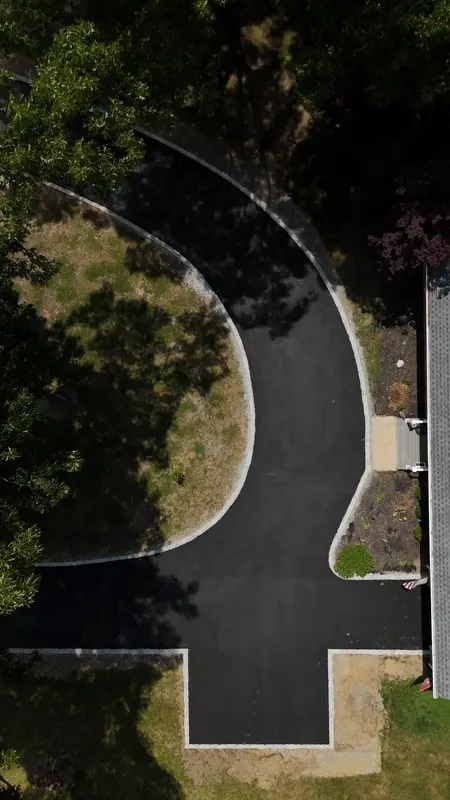
- Turnarounds and K-turn bump-outs so you can pull out forward instead of backing into traffic.
- Flares at the street that make the entrance easier to swing into.
Planning comes first
A widening touches more than asphalt. Before we quote it, we look at:
- Town rules. Width limits, side setbacks, curb cuts and impervious coverage are set by your municipality. Check with the construction or zoning office before you commit to a layout.
- Drainage. Every square foot of new asphalt sheds water. We plan the pitch so runoff goes toward the street or a lawn area, not toward the foundation or the neighbor’s yard.
- Utilities. Gas, water, electric and irrigation lines can run under the planned area. A utility mark-out is requested through New Jersey’s 811 One Call system before any digging.
- Trees and roots. Large roots in the way of the base can lift asphalt later. We talk through the options before excavation.
- The existing driveway. If the current driveway is failing, it may make more sense to replace it and widen at the same time.
How we build the added section
- Lay out the area. We mark the new edges with you on site so you can see exactly how wide it will be.
- Saw-cut the existing edge. The edge of your current driveway is cut back to sound, straight asphalt. Crumbling old edges are not a good thing to pave against.
- Excavate. Topsoil, sod and roots are removed to the depth needed for the new base.
- Build the base. Aggregate base is placed and compacted so the new section is as strong as, or stronger than, the original driveway. Weak spots under a seam are where widenings usually fail.
- Tack the joint. A tack coat is applied to the cut edge so the new asphalt bonds to the old.
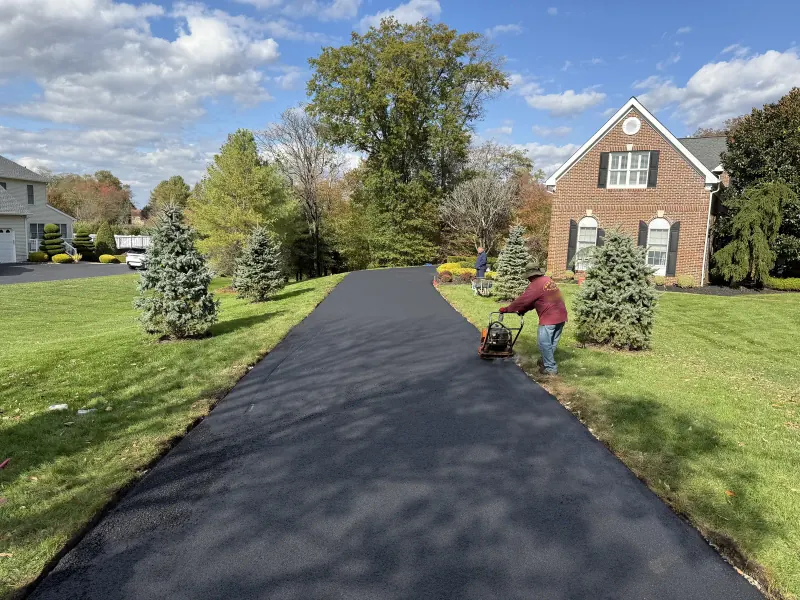
- Pave. Hot asphalt is placed, typically 2 to 3 inches compacted, matching the height of the existing surface.
- Roll the seam. The joint is rolled tight and flush so there is no ridge, gap or step between old and new.
- Finish the edges. New edges are tapered and backed with soil, and the work area is cleaned up.
Why seams fail, and how we prevent it
Most widenings that go wrong fail along the line where old meets new. The usual causes are a new section built on a thinner base than the original, an old edge that was crumbling when the new asphalt was placed against it, or a joint that was never compacted tight. Water finds that line, gets underneath, and the seam opens or one side settles.
The fixes are simple, but they take care: cut back to solid asphalt, build the new base at least as deep as the old one, tack the cut face, and roll the joint while the asphalt is hot. Those are the steps listed above, and we do not skip them.
Should you repave the whole driveway at the same time?
It is worth considering. If the existing driveway is sound but faded or lightly cracked, milling off its worn top and repaving it along with the widening gives you one continuous surface with no visible seam and a uniform color. It also costs less to do both while the crew and equipment are already on site than to come back later. Our asphalt milling page explains how milling keeps the finished height right at the garage and street.
If the existing driveway is breaking up, a full asphalt driveway replacement with the new width built in from the start is usually the better value.
What affects the cost of a widening
- Square footage of the added area.
- Excavation depth and how much soil, sod or roots must be hauled away.
- Base material needed for your soil conditions.
- Length of the seam and saw-cutting.
- Whether the street apron or curb cut changes.
- Whether you also mill and repave the existing driveway.
For a broader look at pricing, see how we price each job. Two posts worth reading before you plan the layout: factors that affect asphalt paving on your driveway and beautifying your driveway with the right paving contractor.
Where we widen driveways
We widen and extend driveways across Monmouth County, Ocean County from Toms River north and southern Middlesex County. Homeowners in Colts Neck, Millstone, Upper Freehold, Howell, Lakewood and Plainsboro are among those we serve.
Questions about asphalt driveway widening & extensions
Will the widened section match my existing driveway?
New asphalt starts out darker than asphalt that has weathered for a few years, so the added section will look different at first. The difference fades over time. If you want a uniform look from day one, we can mill and repave the existing driveway at the same time so the whole surface is new.
Do I need town approval to widen my driveway?
Often, yes. Many towns have rules on driveway width, setbacks from the property line, curb cuts and impervious coverage, and widening at the street usually involves the town. Check with your municipal construction or zoning office before work begins. We can help you sketch the layout and dimensions to bring to that conversation.
Can you add a parking pad off the side of the driveway?
Yes. A side parking pad, turnaround or bump-out is built the same way as a widening: excavate, build and compact the base, then pave and tie it into the existing driveway with a clean joint. We look at drainage carefully so the new area does not send water toward the house or a neighbor.
How long does a widening take?
Many widening projects take a day or two, depending on how much excavation is needed, whether trees, roots or utilities are in the way, and whether we are also milling and repaving the existing driveway. You can usually drive on the new section after a few days, with heavier vehicles waiting a little longer.