Start with what is under the surface
Asphalt driveways in New Jersey all look similar from the street, but the option that is right for yours depends almost entirely on what is underneath: the base and the soil below it. A driveway with a solid base can often be renewed with a new surface. A driveway whose base has failed needs to be rebuilt, no matter how good a new top layer looks on day one.
This page compares the options so you can walk into an estimate knowing the vocabulary. When you are ready for pricing and the full installation process, our main asphalt driveway paving page covers the job from start to finish.
The options side by side
| Option | What it is | Best for | Watch out for |
|---|---|---|---|
| New installation | Building a driveway where there was none, or only gravel | New homes, gravel driveways, added access | Drainage and base depth on raw ground |
| Full replacement | Removing old asphalt and rebuilding the base | Sinking, ruts, widespread alligator cracking, wrong drainage | More excavation and hauling |
| Mill and repave | Grinding off the worn top layer and paving fresh asphalt | Sound base, worn or lightly cracked surface | Base condition; cracks that run deep can return |
| Widening or extension | Adding paved area to an existing driveway | More parking, turnarounds, side pads | Seams, town rules, runoff |
| Drainage and edge fixes | Correcting pitch, low spots and crumbling edges | Water problems on an otherwise solid driveway | Not a fix for a base that has failed everywhere |
New installation
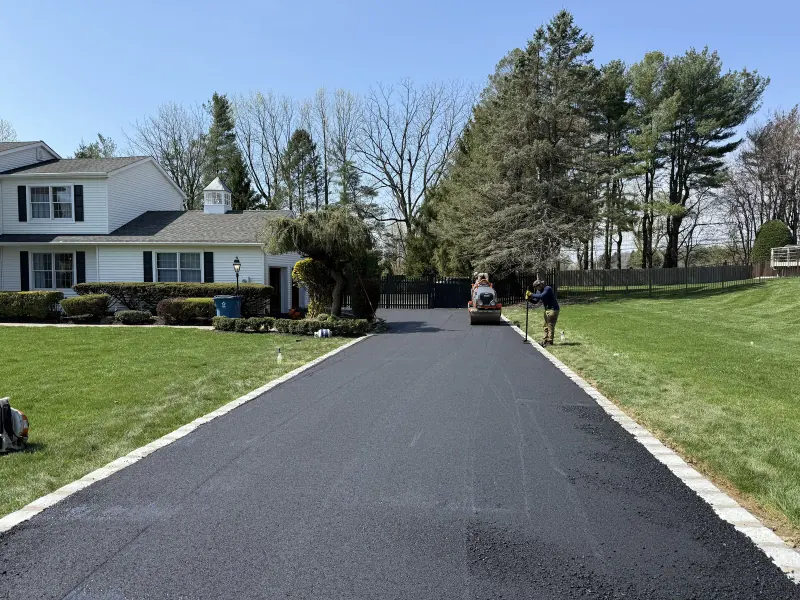
If you are building a new home, replacing a gravel driveway or adding a second access, we start from raw ground. The soil is excavated, graded for drainage, and built up with compacted aggregate before any asphalt goes down.
Full replacement
When a driveway has sunk, rutted or cracked into a web of small pieces, the base has failed. The fix is to remove the old asphalt, correct the soil and base, and pave fresh. Our milling page explains how old asphalt is removed and recycled.
Mill and repave
The worn top layer is milled off, any soft spots in the base are dug out and rebuilt, and fresh asphalt is paved over a tack coat. Because the old surface comes off first, the new driveway stays at the right height against the garage and street. It is often the best value when the base is sound, and our asphalt driveway paving page explains how we check.
Widening
Adding width, a parking pad or a turnaround. The key is a strong base under the new section and a tight seam with the old. Details are on our driveway widening and extensions page.
Drainage and edge fixes
Sometimes the driveway itself is fine and the trouble is water or edges: a low spot by the garage, a pitch that sends runoff toward the house, or an edge crumbling where tires drop off. Correcting those, usually as part of repaving, keeps the base dry and the driveway lasting. Our article on signs your driveway needs to be repaired covers what to look for.
Base: the part you never see
The base is a layer of compacted aggregate between the soil and the asphalt. It spreads the weight of vehicles and lets water drain away from the pavement. In New Jersey, soils range from sandy ground near the shore to heavier, clay-rich soil inland, and each behaves differently. Sand drains quickly but needs thorough compaction and solid edges. Clay holds water and swells, so it usually needs more excavation and a deeper base. A good contractor will talk about your soil, not just your square footage.
Thickness
For a typical home, a new or replacement driveway is about 2 to 3 inches of compacted asphalt over the compacted base. When a driveway is milled and repaved, the new top layer is set to match the depth that was milled off. Driveways that carry heavier vehicles, such as work trucks or campers, may need more of both. Ask any contractor you are comparing to put compacted thickness in writing.
Edges and transitions
Edges are where many driveways start to break down. A well-built driveway has edges that are tapered and backed with soil so they do not crumble when a tire drops off. At the garage, walkways and the street, the new asphalt should meet existing surfaces flush, which often means milling or cutting the old surface at those points. The apron at the street may fall under your town’s rules, so check with the construction or zoning office if it is changing.
Timing and cure
Paving season in New Jersey runs roughly from spring through late fall. Most residential jobs take one or two days on site. You can usually drive on fresh asphalt after a few days, while heavy vehicles should wait longer. The surface keeps curing for months, so expect some softness in summer heat and avoid turning your wheels while parked early on.
How to choose
- Walk your driveway and note sinking, ruts, standing water and the type of cracking.
- Check how high the driveway sits against the garage and street.
- Think about how you use it now and how you will use it in a few years: more cars, a trailer, a turnaround.
- Get an on-site estimate that explains the base, thickness and edges in writing.
Pricing depends on which option fits; our how driveway jobs are priced explains the factors. Related reading: blacktop vs asphalt, common types of asphalt and why summer is a good time to pave.
Serving homeowners in three counties
We help homeowners weigh these options across Monmouth County, Ocean County from Toms River north and southern Middlesex County, including Wall, Middletown, Holmdel, Toms River, Edison and Old Bridge.
Questions about asphalt driveways
Is blacktop the same as asphalt?
For a driveway, yes. Blacktop is the everyday name for hot mix asphalt, the same material used on roads and parking lots: aggregate held together with asphalt binder. Some people use blacktop to mean a slightly different mix, but on a residential driveway the two words describe the same surface.
Which option is the cheapest?
Fixing drainage and edges is the smallest job, followed by milling and repaving, then a full replacement with a new base. But the smallest job is only a good deal if it lasts. Repaving over a failing base, or fixing one edge on a driveway that is breaking up everywhere, often means paying twice. The right choice depends on what is happening below the surface.
What is the best time of year to do my driveway?
Asphalt needs warm enough air and ground temperatures to compact properly, so New Jersey paving season runs roughly from spring through late fall. Late spring and early fall are comfortable working months, while midsummer heat means the surface stays soft longer after paving. Book your estimate early, because schedules fill up in spring.
How long does an asphalt driveway last?
There is no single number, because lifespan depends on the base, drainage, asphalt thickness, the vehicles that use it and how the driveway is cared for. A driveway built on a well-compacted base with good drainage will last far longer than one paved over soft ground. Dealing with drainage problems early and repaving before the base fails also extends its life.